
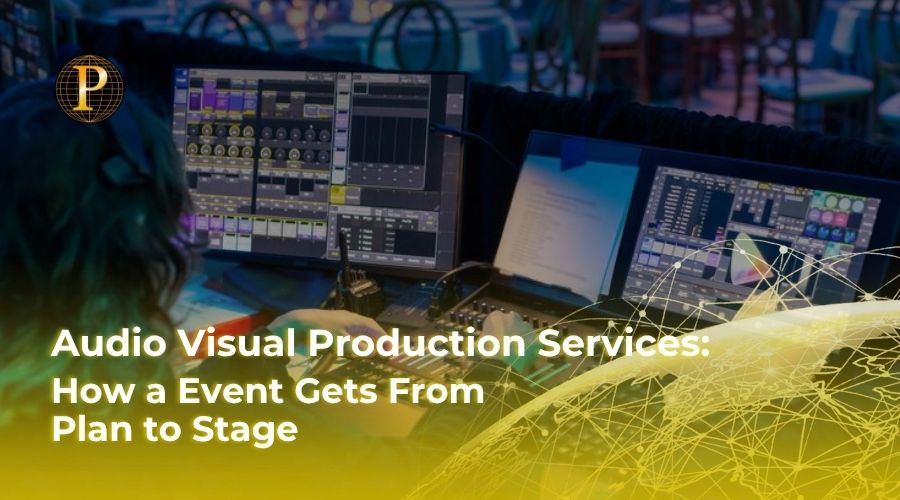
Audio visual production services turn a plan on paper into a live event that people can see, hear, and follow. They cover the design, setup, operation, and breakdown of sound, video, lighting, and streaming systems. For a corporate event, this is the difference between a presentation that runs smoothly and one that stalls in front of the audience.
This guide follows the production process from start to finish, so you can see where each part fits. It also explains how Prestige Labor Solutions supplies the skilled crews that carry out the work on event day.
What Audio Visual Production Services Cover
Production is broader than renting equipment. It covers everything needed to deliver an event technically, from the first planning call to the last cable packed away.
The main areas are audio, video, lighting, and live streaming or recording. Audio includes microphones, speakers, and mixing. Video includes projectors, LED walls, and cameras. Lighting shapes how the room feels and how presenters look on screen. Streaming connects remote viewers and records the content for later use. A production brings these four areas together under one technical plan.
The Production Process, Step by Step
Understanding the process helps you know what to ask for and when.
Planning. The production team reviews the event format, audience size, venue, and run of show. This step decides what equipment and how many people the event needs.
Setup. Crews arrive before the event to install audio, video, and lighting. They connect the systems, adjust them to the room, and label cables and controls.
Rehearsal. Technicians test every microphone, screen, and stream with the actual presenters and files. Problems found here cost minutes to fix. Problems found during the event cost credibility.
Live operation. Technicians run sound levels, switch cameras, cue slides, and monitor the stream. They stay at their stations for the whole event so any issue is fixed immediately.
Breakdown. After the event, the crew packs down and removes equipment, usually within a tight venue deadline.
Who Is on a Production Crew
A production crew divides the work so no one person is overloaded. Each role has a clear job.
An audio engineer manages microphones, mixing, and speaker levels. A video operator runs displays, slides, and camera switching. A lighting technician sets and adjusts the room lighting. A streaming engineer manages the live feed and its connection. A lead technician coordinates the team and solves problems as they arise.
Small events may need only one person covering basic audio and video. Large or hybrid events need the full crew, because one person cannot reliably run sound, lighting, and video at once.
Choosing a Production Provider
Providers fall into three groups. Some supply equipment only, some supply both equipment and crew, and some supply crew only. Decide which fits before you request quotes.
Then check these points:
- Scope. Confirm the quote covers planning, setup, operation, and breakdown.
- Crew vetting. Ask how technicians are screened and whether their experience is verified.
- Corporate experience. Look for a record at business events, not only concerts or weddings.
- Rehearsal time. Confirm a technical rehearsal is built into the schedule.
- Backup plan. Ask what happens if equipment fails or a crew member cancels.
A provider who answers these clearly is usually a reliable one.
How Prestige Labor Solutions Supports Production
Prestige Labor Solutions supplies the skilled people who run audio visual production. It does not rent equipment, so you can use gear from any provider and still have a professional crew on site.
Every technician is vetted for hands-on AV experience. Crews scale from a single technician to a full production team. Nationwide coverage lets companies with events in several cities work with one partner. Quotes are provided within 24 hours, which helps when event dates are close.
Frequently Asked Questions
What are audio visual production services?
They are the planning, equipment, and technical labor used to deliver sound, video, lighting, and streaming at an event.
How is production different from equipment rental?
Rental supplies hardware. Production includes the people and process that set it up and run it.
How far ahead should I book?
Four to six weeks is a safe window. Book earlier for large events or busy seasons.
Can I hire a crew separately from the equipment?
Yes. Many companies rent equipment from one provider and hire technicians from another. Share the equipment list with the crew in advance.
Conclusion
Audio visual production services take an event from planning to breakdown, and each stage depends on skilled people. Choose a provider by checking scope, vetting, corporate experience, rehearsal time, and backup plans, and match the crew to your event size.
Prestige Labor Solutions supplies vetted AV technicians nationwide for corporate events of any size. Contact Prestige Labor Solutions today for a quote within 24 hours.
Comments are closed